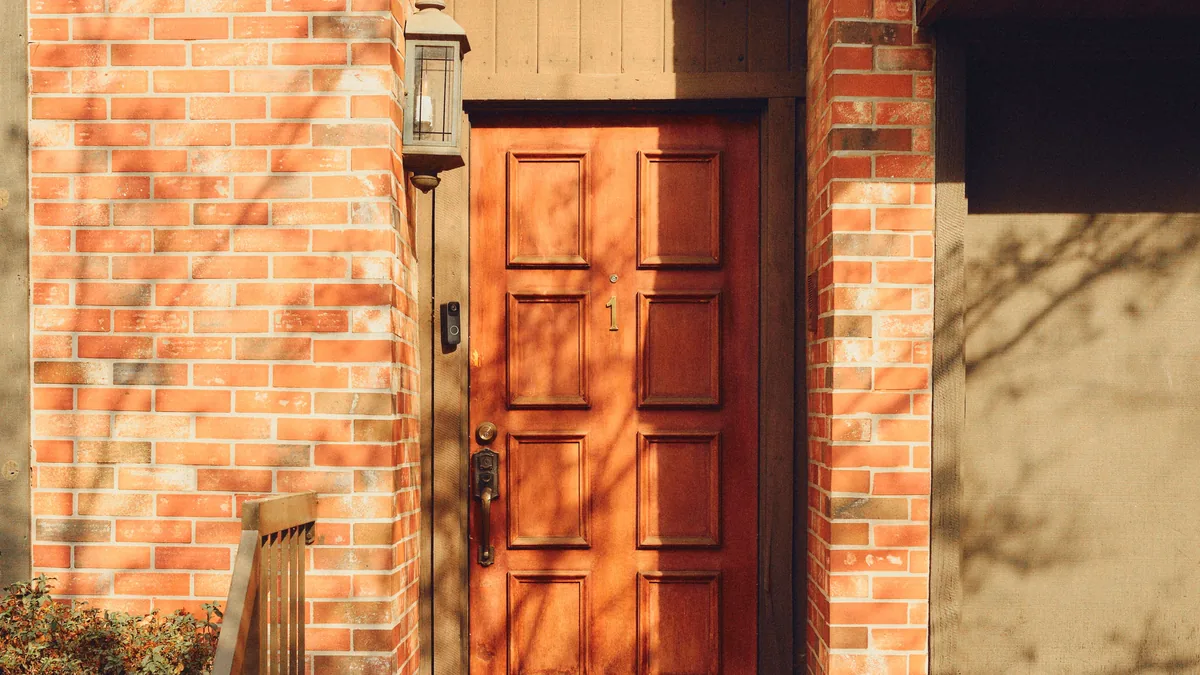
Front porches, screened porches, covered rear entries and the sheltered landing at the top of a set of steps. Birmingham's older housing has a lot of these, particularly the bungalows around Forest Park, Crestwood and Avondale where a deep front porch is part of the architecture.
Because a porch is protected, it is the outdoor surface where you get the most choice.
Why covered concrete is easier
UV exposure drops sharply. There is usually still some indirect light and reflected UV, so an aliphatic topcoat is still the sensible default, but the punishment is a fraction of what a patio takes.
Rain is mostly excluded. Wind-driven rain reaches the outer edge, and that edge is where a porch coating gets tested, but the bulk of the surface stays dry.
Thermal swing is reduced. A shaded slab does not reach the temperatures an exposed one does, so expansion and contraction are gentler.
Freeze-thaw is mild. Less water in the surface means less to expand when a January cold snap arrives.
All of which means the finish options widen considerably.
What that opens up
Decorative finishes that would fail outdoors. A metallic system on a screened porch is entirely reasonable, where the same finish on an open patio would degrade. Same for finer partial-broadcast flake work that would be too smooth for a wet exterior.
Smoother finishes. A porch that stays dry does not need the aggregate load a driveway does. That makes it more comfortable underfoot and much easier to sweep, which matters on a surface where people sit.
Lighter colours. With less direct sun, heat is less of a factor, and a light porch floor makes a shaded entrance feel considerably brighter.
Staining rather than coating. On an older porch with character, acid or water-based staining colours the concrete itself and keeps its variation. Nothing sits on the surface to peel. See concrete staining.
The outer edge, which is the whole job
Everything that goes wrong on a porch goes wrong in the first eighteen inches from the open edge.
That strip takes wind-driven rain, the most UV, the most temperature movement, and any water running off the roof edge where guttering is missing or overflowing. It also often has the most damaged concrete, because it has been getting wet for decades while the rest stayed dry.
Preparation right to the edge, a proper termination, and a slightly more robust specification in that band are what makes the difference between a porch floor that looks good for a decade and one that starts lifting at the front within two years.
Where guttering discharges onto the porch edge, fixing that first is worth more than anything we do to the concrete.
Screened porches
A specific and common Birmingham case. Screening keeps insects and most rain out but does nothing about humidity, and a screened porch on the shaded side of a house can stay damp for long stretches.
Two consequences. Algae and mildew grow on any surface that stays damp, and a sealed coating makes that far easier to wash off than bare concrete does. And where the porch is over a crawl space rather than on grade, moisture from below is worth a thought before a low-permeability coating goes down.
Steps up to the porch
Usually part of the same job, and usually the part with the most damage. Nosings crumble, treads spall, and the whole run has taken more weather than the sheltered porch above it.
These want the exterior treatment rather than the porch treatment: aliphatic topcoat, proper aggregate for grip, rebuilt nosings, and ideally a contrasting tone on the front edge so the step is visible in poor light. See walkway and sidewalk coating for how we handle those.
It is worth deciding deliberately whether the steps match the porch or contrast with it, rather than letting it happen by default.
Older concrete, and what it brings
Porches on houses from the 1920s to the 1950s often have concrete that is genuinely good, dense and well cured, with decades of surface wear on top.
What they also often have: previous paint, sometimes several layers of it, in the grey and red porch paints that were standard for generations. All of that has to come off by grinding, and it is frequently thicker and more stubborn than it looks.
Occasionally the porch has a cementitious topping that was applied at some point over the original slab. Whether that stays or goes is a judgement made on site, based on how well attached it is.
What it costs
Porches are small, which cuts both ways. The total is modest compared with a driveway or a patio. The price per square foot is higher, because setup, edge work and step detailing do not scale down with area.
Combining a porch with the steps and the front walk in a single visit is usually better value than doing them separately, and it looks better than three surfaces finished at three different times.
Common questions
Can I have a decorative finish on a porch?
Yes, and this is the outdoor surface where that genuinely works. Cover reduces UV and rain enough that finishes which would fail on a patio hold up well here.
My porch has old paint on it. Can you go over it?
No. It comes off by grinding, and porch paint is often several layers deep and more stubborn than expected.
Does a covered porch still need a UV-stable topcoat?
We would still use one. There is indirect and reflected light, and the difference in cost is small compared with the cost of getting it wrong at the open edge.
How much grip does it need?
Less than a walkway, because it stays mostly dry. Enough at the outer edge and on any step, where wind-driven rain does reach.
My screened porch goes green in winter. Will this help?
It makes it much easier to wash off, because algae grips a sealed surface less well than open concrete. It does not change the humidity that causes it.
Should the steps match?
Your choice, but the steps want a more robust specification and more grip regardless of colour. A contrasting nosing is worth considering for visibility at night.
Get a free quote
Tell us the space and roughly how big it is. We'll come measure it, and you get the scope and the price in writing.