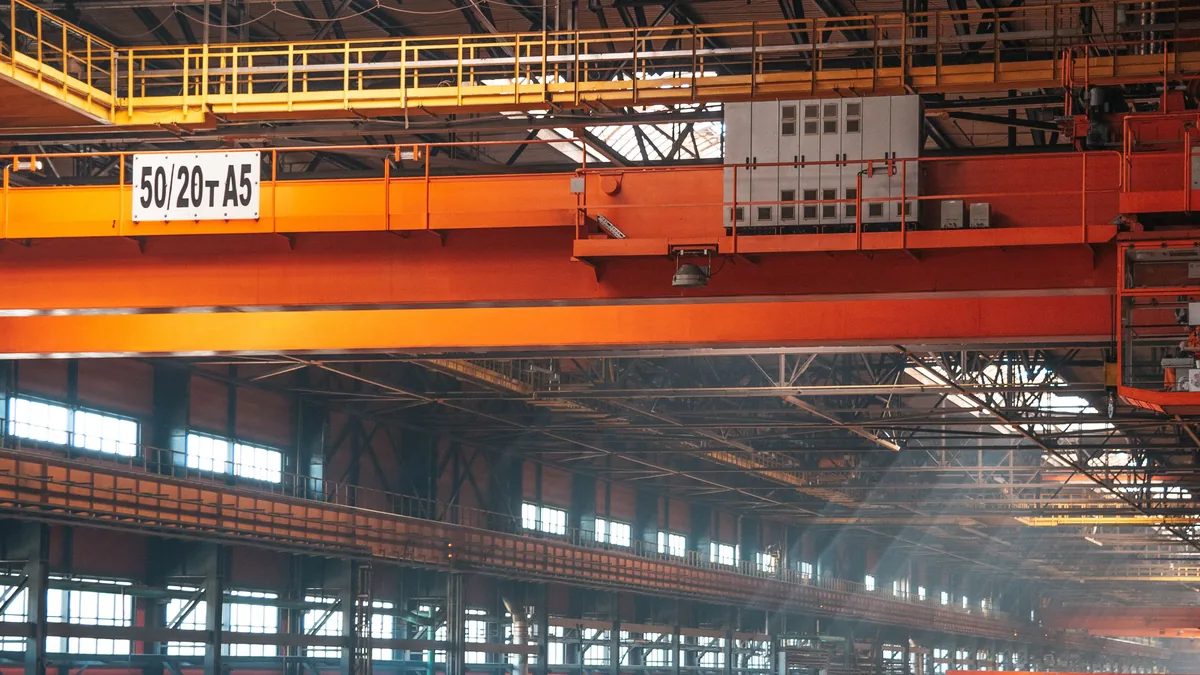
Birmingham was built on heavy industry and a lot of that building stock is still working. Manufacturing floors around Ensley and Fairfield, processing plants, fabrication shops, plating operations and chemical handling facilities across Jefferson County: this is concrete that was poured for one purpose and is frequently now doing another.
Industrial floor coating is the least standardised work we do, because two facilities of the same size can need completely different systems.
The three specification drivers
Chemical exposure
This sets the resin family. A floor meeting dilute detergents is a different specification from one meeting concentrated sulphuric acid, and a floor meeting solvents is different again.
What we need from you is honesty about what is actually used, at what concentration, and where. Not the tidy version. A chemical resistance chart is only useful against a real exposure list, and the most common cause of premature failure on industrial floors is a system specified against the chemicals somebody remembered rather than the ones in use.
Thermal exposure
Hot liquid discharge, steam cleaning, autoclaves, freezer to ambient transitions, and processes that cycle temperature. Thermal shock is what cracks rigid systems, and where it is present, urethane cement usually replaces epoxy for the same reasons it does in a commercial kitchen.
Mechanical load
Forklift type and wheel material, pallet trucks, static loads from racking and equipment, and impact from anything that gets dropped. Hard polyurethane wheels concentrate load far more than pneumatic tyres, and steel-wheeled trolleys more again.
System families and where they belong
High-build epoxy. Economical over large areas, builds thickness well, good general chemical resistance, good adhesion. The default for interior manufacturing and storage floors with moderate exposure and no thermal shock.
Novolac epoxy. A step up in chemical resistance, particularly against acids and solvents. Where a standard epoxy is not enough but the exposure is chemical rather than thermal, this is the answer. Used in bunded areas, chemical storage and plating operations.
Urethane cement. Thick, trowel-applied, thermally compatible with concrete. Where there is thermal shock, aggressive food acids, or a slab too damp for a thin bonded system. Also the choice where falls need to be built into the floor.
Polyaspartic. Where return-to-service time is the constraint rather than the chemistry. A section down and back under load within hours.
Densifier and sealer. Worth stating again because it is under-specified. On a sound slab where the complaint is dusting and there is no significant chemical exposure, a lithium silicate densifier plus sealer costs a fraction of a coating and cannot delaminate. We recommend it when it is the right answer.
Containment and bunded areas
Where chemicals are stored or decanted, the floor is part of the containment system rather than a finish. That means the coating runs continuously up the bund wall with a coved junction, terminations are sealed, and the system is specified against the worst-case spill rather than routine exposure.
Penetrations through a bund floor are a serious detail. Anything passing through has to be sealed properly, because a bund with a leak at a penetration is not a bund.
Slab condition and moisture
Old industrial slabs in Birmingham are frequently thick, well-compacted and entirely without a vapour barrier. Some sit directly on fill.
On a large area, getting moisture wrong is a very expensive mistake. Testing is proportionate to the value at risk: multiple test locations across the floor, because emission rates vary substantially within one building depending on what is underneath.
Joints take the same attention as in a warehouse. Spalled joint edges under hard-wheeled traffic are the most common ongoing maintenance issue on industrial concrete, and semi-rigid polyurea joint fill supports the edges.
Preparation at scale
Shot blasting for open areas, diamond grinding for edges, corners and around equipment. Scarifying where a heavy build-up has to come off.
Existing coatings are common and often multiple layers deep. Establishing what is down there, and how well bonded it is, happens before quoting rather than during the work.
Working in a live facility
Almost all of this work is phased. Areas released in sequence, work out of hours, containment between the work zone and production.
Dust control is not optional in a facility handling food, pharmaceuticals or electronics. Extraction runs continuously and work areas get screened.
Where processes cannot stop, return-to-service time drives the system choice more than cost does, and that is a legitimate reason to pay more per square metre.
What we need for a proper quote
A walk of the floor, the chemical exposure list, the traffic type, the drainage layout, slab age and any known history, and your constraints on access and downtime.
You will get a written scope naming the preparation method, the system, film build, and the phasing, so it can be compared against other quotes on equal terms rather than on totals that describe different work.
For distribution and storage, see warehouse floor coating. For food production, commercial kitchen flooring covers the urethane cement side in more detail.
Common questions
How do I know which system we need?
From the exposure list, the temperatures and the traffic. Any specification produced without those three is guesswork.
Our slab is from the 1960s. Is it too old?
Age is rarely the problem. Old industrial concrete is often excellent. What matters is soundness, contamination and moisture, and all three are testable.
Can you build falls to drain?
With urethane cement, yes, because it is laid thick enough to be graded. A thin bonded coating follows the existing profile and cannot correct fall.
Do we need a full coating or would a sealer do?
Sometimes a densifier and sealer is genuinely the better spend, particularly where the complaint is dusting rather than chemical attack. We will say so when that is the case.
What about our bunded chemical store?
That is containment rather than finish. Continuous coating up the bund wall, coved junction, sealed penetrations, and a system specified against a worst-case spill.
Can you work nights and weekends?
Routinely. On most industrial jobs the phasing around production is the harder half of the planning.
Get a free quote
Tell us the space and roughly how big it is. We'll come measure it, and you get the scope and the price in writing.