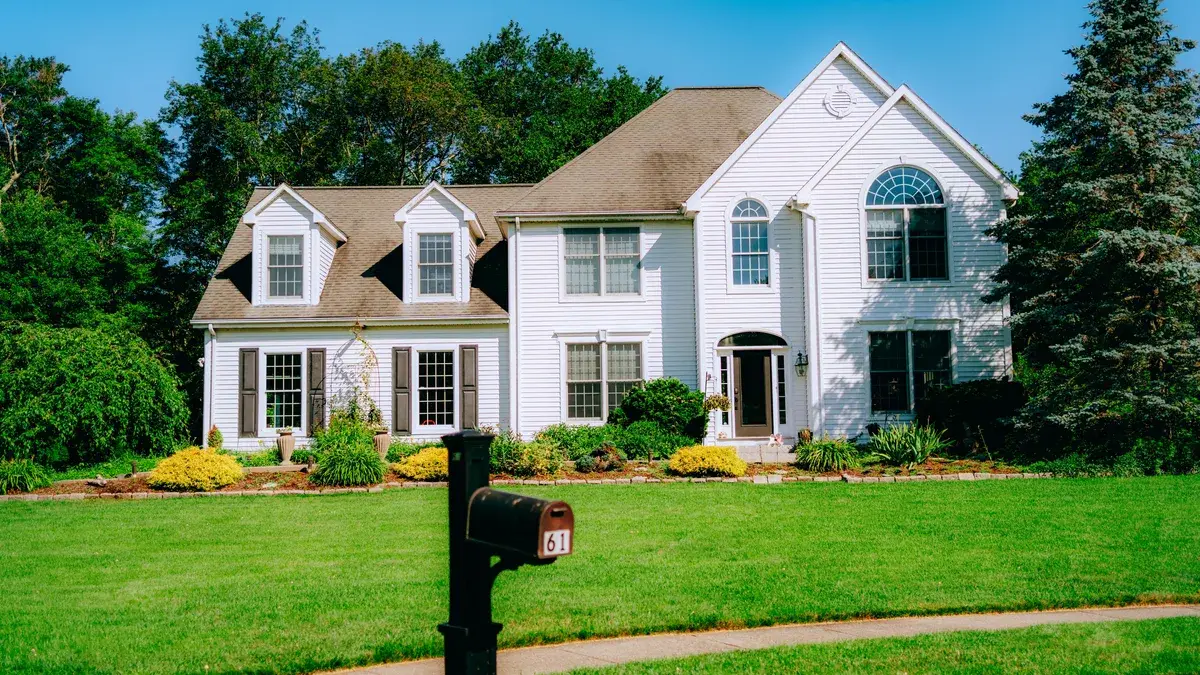
Epoxy Flooring Birmingham covers Clay and the surrounding north Jefferson communities for garage floor coatings, shop and outbuilding floors, basements, patios and driveways.
A recently built city
Clay incorporated relatively recently and most of its housing followed the residential growth that spread north from Birmingham along the Highway 79 corridor and around Cosby Lake. The great majority of what we see here was built from the 1990s onward.
That gives a consistent starting point. Vapour barriers under the slabs, so moisture is rarely the deciding factor. Power-trowelled garage floors that need real grinding. Larger garages, often three bays. And lots big enough that outbuildings are common.
Why the newest floors take the most preparation
The point worth repeating on every page in this part of the metro, because it is consistently the thing homeowners are surprised by.
A builder finishes a garage slab with a power trowel. The result is hard, smooth and closed, and nothing bonds to it. Preparation means grinding through that burnished layer with diamond tooling until the concrete is open and porous again.
An old worn floor has already been opened by decades of use. A new one has not. So a Clay garage from 2015 frequently takes longer to prepare than a Fultondale garage from 1962.
When you compare quotes, the question that separates them is what preparation method is being used. Grinding or shot blasting is the answer you want. Acid etching is the answer that produces a coating which comes off in sheets, and on a power-trowelled slab it comes off completely, because it never keyed in at all.
Larger lots and second floors
Clay properties frequently have more than one slab worth coating: the attached garage, plus a detached shop, a workshop building, a pole barn or a covered equipment bay.
Those outbuilding floors are the least predictable concrete in the metro, because they were usually poured as a separate project by whoever the owner hired. Quality varies from excellent to thin and uneven, and a good number were poured onto graded earth with no vapour barrier.
That last one matters. A slab on bare ground carries vapour continuously, and a low-permeability coating over it lifts from underneath within a couple of years. On any outbuilding we would test rather than assume.
Doing the garage and the shop in the same visit is usually better value than doing them separately, because setup and mobilisation only happen once. Worth quoting both even if you only proceed with one.
Unheated buildings
Detached shops here are almost never conditioned, and a metal building amplifies the annual temperature swing considerably: near freezing on a January night, well above 40°C under a metal roof in August.
Concrete moves through that range. A rigid coating resists the movement and eventually loses at the bond line; a flexible polyurea-based system accommodates it. In an unheated shop that flexibility is the reason the floor is still attached in five years rather than a nicety.
What is actually in these garages
Larger lots mean equipment. Mowers, trailers, side-by-sides, boats, and the tools to maintain all of it.
Two practical consequences. Where a trailer or a stand lives in the garage, tell us where it lands, because repeated concentrated load in one spot is harder on a coating than a vehicle is and it is easy to specify for once we know.
And texture earns its keep. Equipment gets dragged, tools get dropped, and mud comes in on tyres. A full flake broadcast hides all of that in a way a solid colour does not.
Red clay, which the name does not exaggerate
North Jefferson soil is red and there is more bare ground around a larger lot than a tight subdivision.
Warm blends with tan or beige in them absorb it visually. Cool grey blends display it. This is the most consistently useful colour decision on any floor in this metro and it costs nothing to get right.
Getting to you
Clay is around twenty-five minutes north and it is a routine area, with free surveys and no travel charge. Pinson, Gardendale and Fultondale are covered on the same basis.
If the shop building is set back or reached by a gravel track, mention it when booking so we bring the right equipment.
The honest version
A Clay garage on a modern slab is a straightforward single-day job and the result is predictable.
The outbuilding is where the honest conversation happens. Sometimes it is a good slab and a good candidate. Sometimes it is pushing vapour and the answer is a moisture-mitigating primer, which costs more. Occasionally it is thin enough or damaged enough that a coating would be money spent on a surface that is failing underneath.
You should hear which of those you have on the first visit rather than after we have started.
For the full process, see garage floor coating.
Common questions from Clay
Our house is fairly new. Does the slab still need grinding?
Yes, and usually more than an older floor. A power-trowelled builder slab is closed and hard, and a coating will not bond to it without cutting through that surface.
Can you do the shop building as well?
Usually, and doing both in one visit is better value because setup only happens once. The shop slab gets a moisture test first, because outbuildings are frequently poured without a vapour barrier.
Our shop is an unheated metal building.
That is an argument for a flexible system rather than a rigid one. A metal building swings further in temperature than a masonry one and the slab moves with it.
We store a trailer and a side-by-side in the garage.
Tell us where the jacks and stands land. Repeated point load in one spot is harder on a floor than a vehicle, and it is straightforward to allow for.
Which blend hides red clay?
Warm blends with tan or beige. On a larger lot with more bare ground around it, this matters more than it does in town.
Do you charge for travel to Clay?
No. It is inside our standard area and surveys are free.
Get a free quote
Tell us the space and roughly how big it is. We'll come measure it, and you get the scope and the price in writing.