Epoxy Flooring Birmingham covers Bessemer for garage floor coatings, basements and driveways on the residential side, and for warehouse, industrial and workshop floors on the commercial side.
The industrial corridor
Bessemer was built on iron and steel, and the industrial legacy is still the dominant feature of the local building stock. The distribution and manufacturing space along the interstate corridor, and the older works closer to the centre, represent decades of concrete poured to different standards for different purposes.
What we find on those floors, repeatedly:
No vapour barrier. Slabs poured in the 1950s and 1960s frequently sit directly on fill with nothing between. On a large floor, getting moisture wrong is an expensive mistake, so testing happens at multiple points across the area rather than in one spot. Emission rates vary substantially within a single building depending on what is underneath.
Traffic the slab was never designed for. A floor poured for hand trucks now takes sit-down forklifts with hard polyurethane wheels. That concentrates load far more than the original design assumed, and it shows first at the control joints.
Spalled joint edges. The most common ongoing problem on industrial concrete here. Hard wheels hitting an unsupported joint edge chip it, the chip grows, and eventually the forklift driver feels it. Semi-rigid polyurea joint fill supports the edge and stops the progression.
Layers of previous coatings. Some of these floors have been coated two or three times over fifty years. Establishing what is down there, and how well bonded, happens before quoting.
Commercial systems that suit this stock
High-build epoxy is usually the sensible specification for interior warehouse floors here. It is economical over large areas, builds thickness well, and there is neither UV nor hot tyre exposure inside a distribution building.
Where thermal shock or aggressive chemistry is present, urethane cement replaces it. Where return-to-service time is the binding constraint, polyaspartic costs more and buys you hours instead of days.
And on a sound slab where the complaint is simply dusting, a lithium silicate densifier and sealer costs a fraction of a coating and cannot delaminate. That is under-specified across this corridor and we recommend it when it is the right answer.
Fuller detail on warehouse floor coating and industrial floor coating.
Working around a live operation
Almost nobody here can release a whole floor. Work gets phased by bay or by aisle, sequenced around racking that has to be emptied and put back, and a good deal of it happens at night or across a weekend.
Shot blasting replaces diamond grinding for open areas at this scale, because it profiles concrete far faster over large square footage and recovers its own debris. Edges and around obstructions still get ground by hand.
Dust containment matters in any facility storing food or electronics, and work zones get screened with extraction running continuously.
The residential side
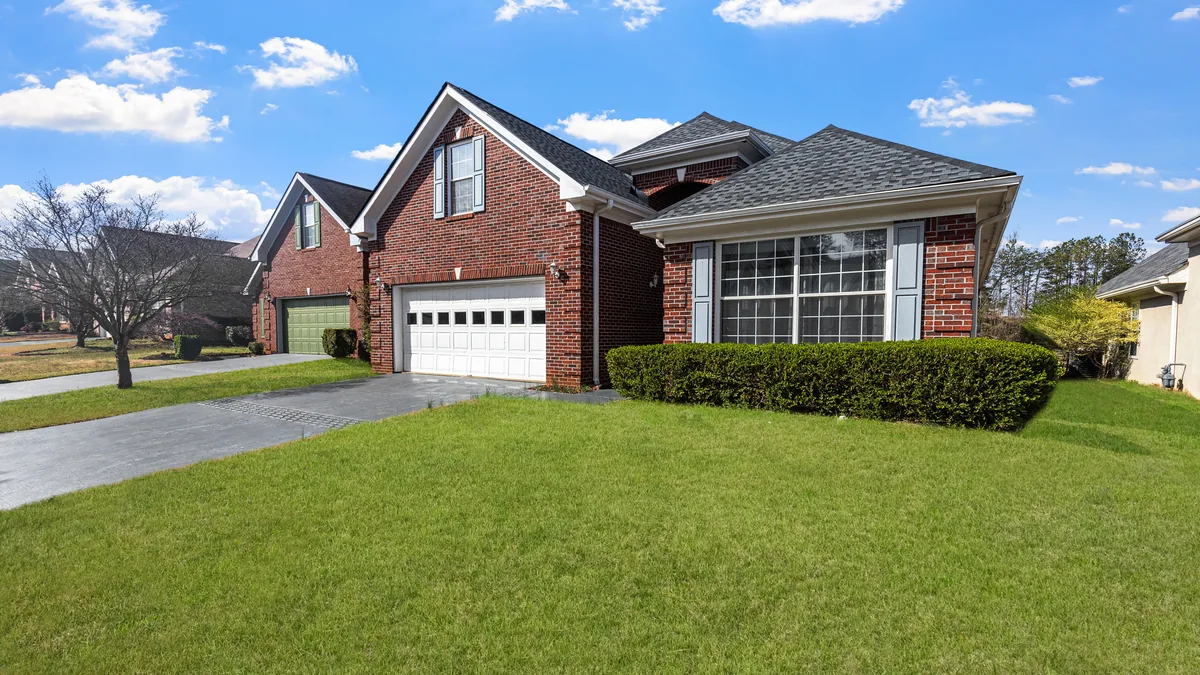
Bessemer housing is largely post-war, with a lot of 1950s and 1960s stock built for the workforce of the mills and foundries.
Those garage slabs are typically sound, well-cured concrete with sixty or seventy years of use on top: deep oil staining, surface pitting, chipped joints, and frequently a layer of grey floor paint from somewhere along the way.
The concrete underneath is usually good. Older slabs from this era often take a coating better than newer builder-finished ones, because decades of wear have already opened the surface that a grinder would otherwise have to cut through.
Detached garages are common in the older streets, and being unheated they swing further in temperature than an attached garage does. That is an argument for a flexible polyurea base rather than a rigid system, which is the same conclusion we reach almost everywhere but with a slightly different reason.
Workshops and small commercial
Bessemer has a lot of independent workshops, fabrication shops, tyre shops and service bays, and this is a good middle ground between the two halves of this page.
The requirements are workshop requirements: chemical resistance against brake fluid and oil, tolerance of hot tyres, and detailing around lift base plates that does not start peeling in year two. See auto shop floor coating.
These are also the jobs where phasing bay by bay keeps a business trading, and where a fast-cure system genuinely pays for itself by returning a bay the next morning rather than the next week.
What we need to quote
On residential, a look at the slab and a conversation about what you want. On commercial, a walk of the floor, your chemical and traffic exposure, the drainage layout, and how much of the space can be released at a time.
Commercial quotes come with the preparation method, system, film build and phasing named in writing, so you can compare them against anything else you are holding rather than comparing two totals that describe different work.
Common questions from Bessemer
Our warehouse slab is from the 1960s. Too old?
Age is rarely the issue. Old industrial concrete here is often excellent. What matters is soundness, contamination and moisture, and all three are testable.
Can you work around our shifts?
Routinely. Phased by bay or aisle, nights and weekends as needed. On most industrial jobs the phasing is the harder half of the planning.
Our joints are chipping under the forklifts.
Very common here. Semi-rigid polyurea joint fill supports the edges and stops it progressing. It is worth doing whether or not you coat the floor.
Do we need a full coating or would a sealer do?
If the slab is sound and the complaint is dusting, a densifier and sealer costs a fraction and cannot peel. We will say when we think that is the better spend.
Our 1950s garage floor has paint on it.
It grinds off. The concrete underneath is usually good, and slabs of that era often take a coating better than a new builder's floor does.
Do you cover the whole of Bessemer?
Yes, residential and commercial, and further out along the corridor for larger commercial jobs.
Get a free quote
Tell us the space and roughly how big it is. We'll come measure it, and you get the scope and the price in writing.